Dogs thrive when their minds stay active. Physical exercise matters, of course, yet mental engagement often plays an even bigger role in a dog’s overall happiness and behavior. When dogs lack stimulation, they quickly develop destructive habits such as chewing furniture, excessive barking, digging, or constant attention-seeking.
Fortunately, the right toys can transform that energy into something positive.
Interactive toys challenge a dog’s brain, encourage problem-solving, and keep pets engaged for long periods. As a result, dogs stay calmer, more focused, and far less likely to develop boredom-related behaviors.
In this guide, you’ll learn how to choose the best interactive dog toys for mental stimulation, why they work so well, and which types of toys provide the greatest cognitive benefits for dogs of all sizes and personalities.
Why Mental Stimulation Matters More Than Most Owners Realize
Many dog owners believe that a long walk solves most behavioral problems. While exercise certainly helps, dogs also need mental challenges to feel truly satisfied.
Think of a dog’s brain like a muscle. Without regular challenges, that muscle weakens. However, when dogs solve puzzles, explore new textures, or search for hidden treats, their minds stay sharp and engaged.
Mental stimulation provides several important benefits.
First, it reduces destructive behavior. Bored dogs look for entertainment, and unfortunately, furniture, shoes, and pillows often become their favorite targets. However, challenging toys redirect that energy into something productive.
Second, cognitive play reduces anxiety. Dogs that remain mentally engaged throughout the day tend to feel calmer and more secure.
Third, mental games build confidence. When dogs solve small problems, they gain a sense of achievement that strengthens their overall behavior.
Because of these reasons, many trainers now recommend interactive dog toys for mental stimulation as part of a dog’s daily routine.

Signs Your Dog Needs More Mental Stimulation
Not every dog clearly communicates boredom, yet several common behaviors often reveal the problem.
For example, dogs that constantly chew random objects usually lack mental outlets. Similarly, excessive barking often signals frustration or pent-up energy.
You may also notice digging in the yard, pacing around the house, or demanding attention every few minutes. These behaviors rarely mean the dog feels “bad.” Instead, they usually indicate that the dog simply needs more challenges.
Interactive toys provide exactly that.
Instead of wandering around the house searching for entertainment, dogs focus on puzzles, hidden treats, or problem-solving activities.
Consequently, the entire household becomes calmer.

How Interactive Toys Improve Cognitive Development
Dogs naturally explore the world through their noses, paws, and mouths. Interactive toys take advantage of these instincts.
For example, puzzle toys require dogs to slide panels, lift lids, or push compartments in order to reveal treats. This type of activity encourages patience and persistence.
Similarly, treat-dispensing toys reward dogs after they roll, bounce, or manipulate the toy correctly. Therefore, dogs quickly learn that effort leads to reward.
Because of this learning process, interactive dog toys for mental stimulation help strengthen several cognitive skills.
Problem-solving improves because dogs must experiment with different actions. Memory improves because dogs remember how to unlock rewards. Focus improves because dogs remain engaged for longer periods.
Over time, these activities build a more balanced and intelligent pet.
Interactive Dog Toys for Mental Stimulation: What Makes a Toy Truly Effective
Not every toy challenges a dog’s mind. Some toys simply provide chewing or physical play. Although those toys still serve a purpose, true interactive toys involve a mental component.
Effective cognitive toys usually include at least one of the following features.
First, they include hidden rewards. Dogs must discover how to access treats or food.
Second, they require manipulation. Dogs push, spin, roll, or lift pieces in order to achieve a result.
Third, they create unpredictable movement. Toys that bounce or move irregularly stimulate curiosity and encourage exploration.
Finally, durable construction matters. Dogs quickly lose interest when toys break too easily.
Therefore, the most effective toys combine challenge, durability, and reward.

Best Types of Interactive Dog Toys for Mental Stimulation
Different toy categories stimulate dogs in different ways. Because every dog has a unique personality, choosing the right type makes a significant difference.
Puzzle Toys
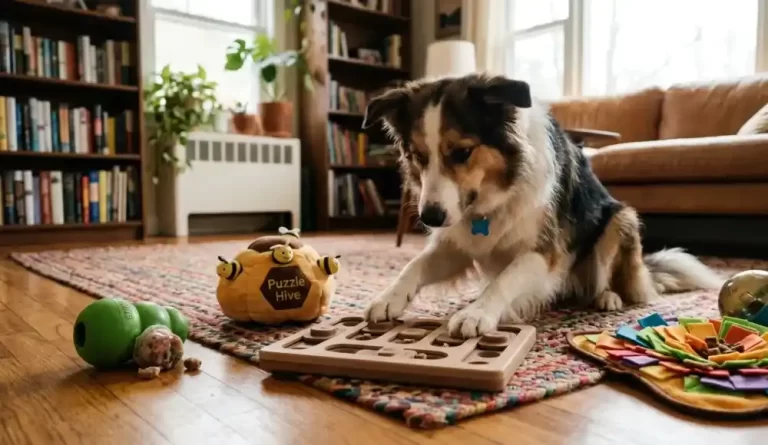
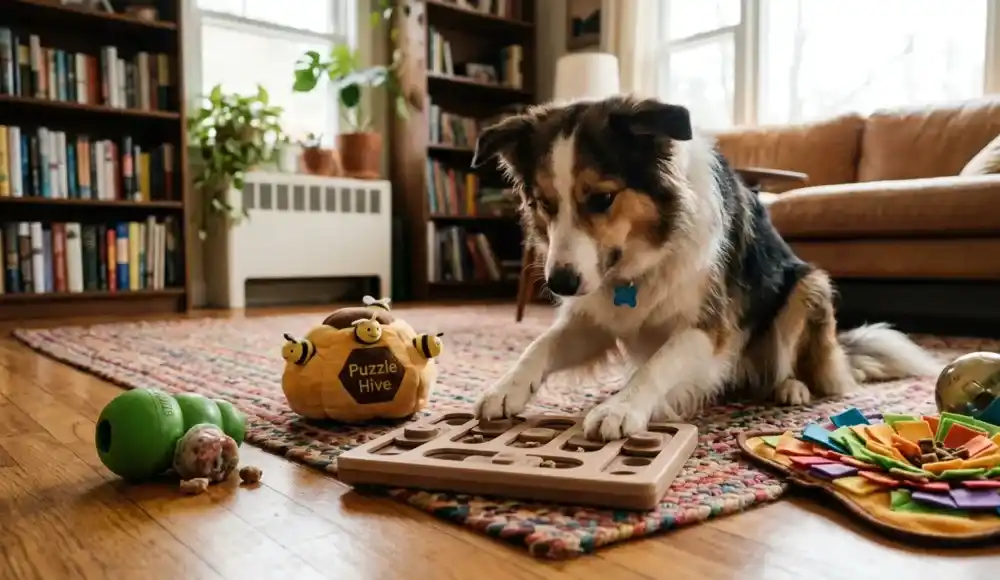
Puzzle toys encourage dogs to solve problems step by step. Most designs include compartments that hide treats beneath sliding panels or rotating pieces.
Dogs must explore each part of the toy until they discover the correct movement that reveals the reward.
As a result, puzzle toys often keep dogs engaged for extended periods.
These toys work especially well for intelligent breeds such as Border Collies, Australian Shepherds, Poodles, and German Shepherds.
Treat-Dispensing Toys
Treat-dispensing toys combine play with reward. Dogs roll, chew, or push the toy across the floor, and eventually small treats fall out.
Because the reward appears gradually, dogs remain focused longer.
In addition, these toys slow down eating habits. Many owners even replace traditional food bowls with treat-dispensing toys during mealtime.
This approach transforms feeding into a mental game rather than a routine activity.
Snuffle Mats
Snuffle mats mimic natural foraging behavior. Owners hide small treats among fabric strips, and dogs must sniff through the mat to locate each piece.
This activity stimulates a dog’s strongest sense: smell.
Because scent work requires intense focus, snuffle mats often tire dogs faster than physical exercise alone.
Interactive Ball Toys
Interactive balls move unpredictably, bounce irregularly, or release treats while rolling.
Dogs naturally chase moving objects, so these toys quickly capture attention.
Moreover, moving toys combine physical activity with mental stimulation, which creates a balanced challenge for energetic dogs.

Interactive Dog Toys for Mental Stimulation: Choosing the Right Toy for Your Dog
Not every toy suits every dog. Several factors influence the ideal choice.
First, consider your dog’s chewing strength. Aggressive chewers require extremely durable toys made from strong rubber or reinforced materials.
Second, consider your dog’s intelligence level. Highly intelligent dogs may quickly solve simple puzzles. Therefore, more complex toys provide longer engagement.
Third, evaluate your dog’s patience level. Some dogs enjoy slow puzzles, while others prefer toys that move and reward quickly.
Age also matters. Puppies benefit from softer materials and simpler puzzles, while adult dogs can handle advanced challenges.
Because each dog differs, experimenting with multiple toy types usually produces the best results.
How to Introduce Interactive Toys Successfully
Even the best toy fails when owners introduce it incorrectly. Dogs need guidance during the first interaction.
Start with simple challenges. Place treats in easy-to-access compartments so the dog quickly learns the concept.
Next, gradually increase difficulty. Hide rewards deeper within the toy or choose puzzles with more moving parts.
Positive reinforcement also helps. Praise the dog when it interacts with the toy successfully.
Additionally, rotate toys regularly. Dogs lose interest when they see the same toy every day. However, when owners rotate toys weekly, dogs treat them like brand-new objects.
Because of these small adjustments, interactive dog toys for mental stimulation remain exciting and effective over time.
Mistakes Dog Owners Often Make
Many owners accidentally reduce the effectiveness of interactive toys. Fortunately, avoiding a few common mistakes solves the problem quickly.
First, some owners introduce toys without rewards. Dogs quickly lose interest when puzzles offer no payoff.
Second, owners sometimes choose toys that are too difficult. When dogs cannot solve the puzzle after several attempts, frustration replaces curiosity.
Third, many owners leave toys available all day. Constant access reduces novelty, which lowers engagement.
Instead, treat interactive toys as special activities. When dogs associate toys with excitement and reward, engagement increases dramatically.
Creating a Daily Mental Enrichment Routine
Dogs benefit most from consistent mental stimulation. A simple routine provides structure and variety.
Morning routines often work well with treat-dispensing toys during breakfast. Instead of eating quickly from a bowl, dogs spend several minutes solving the toy.
Midday playtime may include puzzle toys or scent games. Even short sessions can significantly improve behavior.
Evening routines often involve interactive balls or snuffle mats. These activities release leftover energy before bedtime.
Because dogs love routine, this schedule gradually builds anticipation and excitement.
Final Thoughts
Mental stimulation transforms a dog’s daily life. While physical exercise remains important, cognitive challenges complete the picture.
Interactive toys provide enrichment, reduce destructive behavior, and strengthen the bond between dogs and their owners.
More importantly, they allow dogs to express their natural curiosity, intelligence, and problem-solving instincts.
By introducing the right toys and maintaining a consistent enrichment routine, owners create a healthier and happier environment for their pets.
For this reason, many trainers strongly recommend interactive dog toys for mental stimulation as one of the most effective tools for improving canine well-being.